
The bag looks promising. Dark matte packaging, a name that hints at distant mountains, maybe even a tasting note or two: “chocolatey, smooth.” You crack the seal, scoop the grounds, hit brew. The kitchen fills with the familiar smell of coffee, but the first sip is, somehow, less than the promise. Not bad. Just… muted. A background hum instead of a song.
For millions of people, that is coffee. Reliable, comforting, and quietly disappointing. Meanwhile, a parallel universe has been building—one where **artisanal coffee** is treated less like a pantry staple and more like a seasonal fruit, a craft beer, a natural wine. It is not just a taste thing, though the taste can be extraordinary. It is part of a broader shift in how we spend on everyday pleasures: fewer things, better things.
GlobeNewswire’s 2026 Coffee Beans Business Analysis pegs the specialty coffee market on track to reach $47.8 billion by 2032, a number that does not move without a cultural tide behind it. In the same year, Dunnhumby’s Coffee Trends report points to two clear drivers of that tide: premiumization and transparency. We are starting to ask harder questions about what we drink every morning, and we are willing to pay a little more when the answers are good.
But if you are standing in the aisle of a grocery store, staring at rows of glossy bags, it is unclear where to begin. What is marketing, and what is real? Why is artisanal coffee better, anyway? And how radical is the jump from your usual supermarket blend to something roasted last week by a small team on a side street—say, at a roastery like 23rd Street Coffee?
To answer that, we have to dismantle a few myths, talk honestly about flavor and freshness, and look at how your daily cup connects to farms, families, and a global system that is creaking under climate pressure. The stakes are higher than a nicer latte. Though the latte helps.
What Actually Makes Coffee “Artisanal”?
“Artisanal” is one of those abused food words that can mean everything and nothing. On one end, there is **specialty coffee**, with real standards and measurable quality. On the other, there are mass-market brands sprinkling the word on labels because it sounds good next to “bold.” You deserve a clearer line.
The Specialty Coffee Association (SCA), the closest thing the industry has to a governing body, defines **specialty coffee** as coffee that scores 80 points or above on a 100-point cupping scale. Trained tasters evaluate green coffee for defects, then roasted coffee for aroma, flavor, aftertaste, acidity, body, balance, and overall impression. Below 80, it is commercial grade. Above 80, it is specialty. That threshold is not arbitrary; it is the line between “good enough for a can on the bottom shelf” and “worth celebrating for its character.”
So where does **artisanal coffee** sit in all this? Think of “artisanal” as the way, and “specialty” as the bar. Artisanal is about intent and method. It is the small batch roasting instead of industrial drum lines. It is a focus on individual lots and **single-origin coffee** instead of anonymous blends of whatever was cheap this season. It is roasting to highlight sweetness and nuance rather than to obliterate flaws with darkness.
Commercial brands are designed to be consistent, scalable, and shelf-stable. That means blending huge volumes of beans from multiple countries, roasting darker to hide variability, and engineering a flavor profile that is the same whether you buy it in Chicago or São Paulo. Artisanal roasters accept that coffee is agricultural, not industrial. They lean into variation—different harvests, different farms, different flavor arcs throughout the year—and they put their name on the bag because they stand behind those choices.
This is where the idea of **third wave coffee** comes in. The first wave was commodity coffee: instant jars, diners, and the notion that coffee is just fuel. The second wave was café culture—espresso drinks, flavored syrups, the rise of the latte as a lifestyle object. The third wave treats coffee like wine: a farmed product whose place, processing, and roasting deserve attention. Artisanal roasters live here, in the third wave, building relationships with growers and treating every crop as a collaboration, not a raw material.
The Shelf-Life Problem Nobody Talks About
Here is the thing that sounds like a conspiracy theory until you check the dates: Most commercial grocery coffee is between six and eighteen months past its roast date by the time it hits your kitchen. That is not an accident; it is a design choice. If you are a multinational shipping millions of pounds around the world, you need coffee that can sit in warehouses, trucks, and shelves without complaint.
To achieve that, commercial coffee is typically roasted darker and packed for a long **best-by date**—often printed without a corresponding roast date. The message is, “Trust us. This is fine until next year.” The problem is that from the moment coffee leaves the roaster, oxygen becomes the enemy. Lipids and aromatics in the beans begin to oxidize. Volatile compounds—the ones that carry those delicate floral, fruity, or caramel notes—dissipate. Bitterness creeps in as the brighter notes fade.
If you have ever wondered, is fresh roasted coffee worth it, this is the crux. Freshness does not mean “roasted an hour ago” (in fact, coffee needs a short rest), but it absolutely does not mean “roasted last year.” For most artisanal roasters, **fresh roasted coffee beans** hit their stride between about four days and four weeks after roasting, depending on the roast level and brewing method. After that, the decline is not dramatic at first, but it is steady.
The grocery supply chain is not built around that window. Artisanal roasters like 23rd Street Coffee are. Bags are roasted in **small batches**, stamped with an actual roast date, and often shipped direct-to-consumer within days. You are drinking coffee that is still expressive, alive with aroma, with enough of its volatile range intact to taste the difference in the cup.
This is not snobbery. It is chemistry. And once you taste truly fresh coffee next to something a year off the roast, it is very hard to go back.
Where Your Coffee Comes From Matters
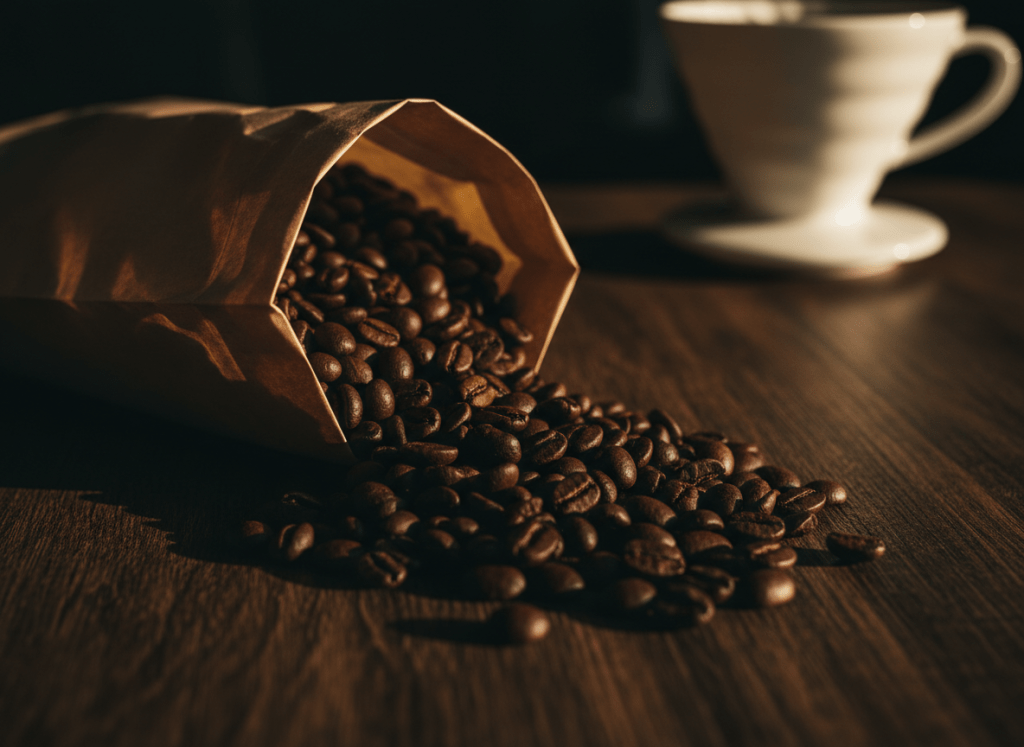
In 2026, you probably know where your eggs come from. You might know the dairy that makes your favorite yogurt, the fishing region behind that can of tuna, even the farm that grows the wheat in your bread. Coffee, despite being one of the most traded commodities on earth, has historically floated above that trend in a haze of vagueness. “100% Arabica.” “Premium blend.” Origins blurred into marketing copy.
The rise of **single-origin coffee** is changing that. Instead of blending beans from multiple countries to hit a generic flavor target, single-origin offerings focus on one country, one region, often one specific farm or cooperative. Suddenly, the bag does not just say “Colombia”; it might list Huila, or Nariño, and even the name of the producer. You are not buying “coffee.” You are buying this harvest, from this place, grown by these people.
This is more than romance. It is traceability. When you can follow a coffee back to its source, you can ask better questions about how it was grown and processed. Were the farmers paid a stable price, or were they at the mercy of volatile commodity markets? Are they investing in shade trees, soil health, and water conservation, or mining the land to survive another season? **Transparency in food sourcing** is not just about feel-good storytelling; it is a mechanism for accountability.
Many artisanal roasters embrace versions of direct trade, forming long-term relationships with producers rather than treating coffee as a series of anonymous bids. That can mean committing to buy from the same farm every year, paying premiums for quality, and collaborating on improvements in processing and sustainability. It is a quiet rebuke to the race-to-the-bottom logic that drives much of commodity coffee.
There is also the climate reality. **Sustainability and coffee farming** are no longer side topics; they are existential. Rising temperatures and shifting rainfall patterns are pushing suitable coffee-growing regions higher and higher up the mountains. Disease pressure is increasing. The farms that will still be producing coffee in 2040 are the ones investing in resilience now. When you buy from roasters who care where their coffee comes from and how it is grown, you are voting, in a small but real way, for that future.
Supermarket coffee, by design, cannot tell you much of this story. The supply chains are too complex, the blends too broad, the incentives misaligned. Artisanal coffee, sold in smaller volumes with shorter lines between farm and cup, can. That specificity is one of the quiet luxuries of the third wave.
The Flavor Gap Is Real
Flavor is where all of this either works or collapses. You can say all the right things about sourcing and ethics, but if the cup is flat, no one will stick around. Fortunately, the science is on the side of the small.
Coffee is one of the most chemically complex foods we consume. Researchers have identified more than 1,000 aromatic compounds in roasted coffee—more than in wine, more than in chocolate. Each origin and processing method sketches a different **coffee flavor profile**: Ethiopian coffees with jasmine and bergamot, Kenyan lots that taste like blackcurrant and tomato, Central American coffees with caramel and apple, Brazilian coffees that lean toward nuts and cocoa.
Unlocking those flavors is a dance between green coffee and roast profile. During roasting, the **Maillard reaction**—the same series of browning reactions that makes toasted bread and seared steak so compelling—transforms sugars and amino acids into an intricate web of flavor compounds. Pull the roast too early and the coffee can taste grassy or sour. Take it too far and you burn off the nuance, leaving a one-note bitterness that might be comforting with cream and sugar but erases any sense of place.
Artisanal roasters tend to roast in smaller batches and taste constantly, adjusting profiles for each lot. They are interested in clarity as much as comfort—the moment when the sweetness peaks, the acidity shines, and the aftertaste lingers pleasantly instead of scraping the palate. They roast with the end brew method in mind: a light to medium roast for **pour over coffee**, where transparency is key; something a touch deeper for espresso, where body and solubility matter more.
Freshness plays a role here too. After roasting, beans go through a period called **degassing**, where carbon dioxide escapes from the coffee. For the first day or two, there is so much gas that it can actually interfere with extraction, leading to uneven brews and volatile, unsettled flavors. After that, the CO₂ levels drop into a sweet spot. Aromatics are still vibrant, but the coffee is stable enough to brew consistently. Over weeks and months, the gases and aromatic compounds decline together, and the cup dulls.
Most commercial coffee is engineered to taste “like coffee” even at that dulled stage. Which is to say: bitter, roasty, blunt. Artisanal coffee, brewed reasonably fresh, tastes like something else entirely. It has shape. It has midtones. It invites you to pay attention, not because you are supposed to, but because your brain recognizes that something interesting is happening.
Brewing at Home Has Never Been Better
There is another reason artisanal coffee is having a moment: the tools to make it shine have moved from cafés into home kitchens. The 2026 National Coffee Data Trends (NCDT) report confirms what anyone who has spent time on coffee TikTok already knows—there is a full-on **home brewing renaissance** underway, with continued growth in at-home specialty beverage consumption.
The once-esoteric gear of coffee pros is now standard-issue on countertops. A glass dripper for **pour over coffee**, often a V60 or similar, sits next to the kettle. An AeroPress hides in a drawer, ready for travel or fast afternoon brews. A French press that used to see service only on lazy Sundays is now part of the weekday rotation. Burr grinders have become the new toaster—appliances that feel unremarkable until you imagine life without them.
All of this matters because the best way to brew coffee at home is the one that gives you a bit of control. You do not need a thousand-dollar espresso machine to benefit from better beans. You need freshly roasted coffee, ground correctly, and a method you can repeat. With that, the difference between commodity beans and thoughtfully sourced, freshly roasted ones becomes stark. The same V60 that makes a grocery-store blend taste vaguely bitter and thin will, with a carefully roasted single-origin, reveal sweetness, texture, and aroma you might have assumed only cafés could produce.
This is the quiet revolution. The line between café coffee and home coffee is blurring, not because cafés are worse, but because your kitchen is better equipped. **Direct-to-consumer coffee** brands and **small batch coffee roasters** are leaning into this, shipping beans that are roasted to order and providing brew guides that assume you have access to a scale, a kettle, and five unhurried minutes in the morning.
If coffee used to be a background habit, it is becoming a daily ritual again. Not fussy, necessarily. Just intentional. And once you build a simple routine around good beans, it is hard to justify spending $5 on a drink that is, at best, an echo of what you can make yourself.
The Price Conversation: Is Artisanal Coffee Worth It?
None of this is free. Artisanal coffee costs more than the giant red can on the bottom shelf, and you should be suspicious of anyone pretending otherwise. But price, in this case, benefits from a little math.
A standard 12-ounce bag of whole-bean specialty coffee will yield somewhere between 17 and 22 cups, depending on how strong you brew. At around $20 a bag—a typical price for carefully sourced, freshly roasted beans from a roaster like 23rd Street Coffee—you are looking at roughly $1 per cup, maybe a bit more if you brew generously. Compare that to a $3.50 to $5 drink from a chain café, where you are paying not just for the coffee but for rent, labor, branding, and the pleasure of being somewhere else.
In that light, artisanal coffee is less a splurge than a reallocation. You are spending more on the ingredient and less on the theater around it. You are also, if the roaster is doing their job, sending a greater share of that dollar back up the chain—to farmers, to workers at mills and washing stations, to the people actually growing and handling the coffee.
This fits neatly into the broader trend of **premiumization of everyday goods**. We buy fewer cheap T-shirts and one well-made one. We cook at home with better olive oil and good salt. Coffee belongs in that conversation: a daily ritual that shapes your mornings, your mood, even your sense of time. Upgrading that experience is not frivolous. It is one of the more rational luxuries available.
Of course, there is a ceiling. You do not have to chase the rarest micro-lots or limited releases to drink well. The sweet spot, for most people, is simply moving from generic commercial blends to reliably roasted, traceable specialty coffee. The question is not “How expensive can this get?” It is “What is the least I have to spend to stop drinking stale, anonymous coffee?”
What to Look for When Choosing a Specialty Coffee
So you are ready to trade up. How do you navigate the shelves—or the web pages—without falling for more empty adjectives? There are a few quiet signals that separate marketing gloss from the **best coffee beans** for your morning ritual.
First, look for a roast date, not just a best-by date. A bag that proudly prints “Roasted on: June 12” is telling you the roaster expects you to care about freshness. One that only shows “Best by: June 2027” is telling you something else entirely. Ideally, you are buying coffee roasted within the past few weeks, not the past few quarters.
Second, pay attention to origin information. Does the bag list a country, region, and possibly a farm or cooperative? Are you told anything about the variety or how the coffee was processed—washed, natural, honey-processed? That level of detail signals that the roaster sees coffee as more than a commodity input. It also gives you clues about what the coffee might taste like, helping you build your own mental map of preferences over time.
Third, if you are curious about quality metrics, keep an eye out for references to SCA cupping scores. You do not need to obsess over whether a coffee is 84 or 87 points, but knowing that your beans come from lots that score 80+—that they meet the basic threshold for specialty—can reassure you that you are not just paying a premium for packaging.
Finally, consider scale. **Small batch coffee roasters** tend to roast often and in modest quantities, which supports freshness and experimentation. They are also more likely to respond to questions: Where was this coffee grown? How do you think it is best brewed? What are you excited about this season? Certifications—organic, Fairtrade, Rainforest Alliance—can add another layer of assurance, especially around environmental and labor practices, though they are not the only path to doing right by farmers.
Brands like 23rd Street Coffee increasingly combine all of this—transparent sourcing, clear roast dates, thoughtful flavor notes—with the convenience you are used to from big-box coffee. Subscribe and your beans just show up. Click once and your favorite **single-origin coffee** arrives before you have emptied the last bag. It is the grocery aisle, upgraded: fewer unknowns, more intention.
A Different Kind of Morning
None of this requires you to become a coffee person in the caricatured sense. You do not have to start slurping from cupping spoons or memorizing altitude charts. You do not even have to give up your morning routine. In many ways, you are just swapping one habit for another: the same motions, better raw material.
What changes, mostly, is attention. The first time you brew a freshly roasted, carefully sourced coffee at home—maybe from a roaster like 23rd Street Coffee—you will likely notice the aroma before you notice anything else. It will be louder, somehow. The bloom in your pour over will swell higher. The first sip might surprise you: sweetness where you expected bitterness, clarity where you expected muddle.
Then, as with all good luxuries, it will normalize. It will become just how your coffee tastes now. And that may be the most compelling argument for making the switch: not that you will think about coffee all the time, but that you will eventually not have to think about it at all. You will wake up, grind, brew, and drink something that quietly meets a higher standard.
If you are curious where to start, you could do worse than a roastery that was built for exactly this in-between space—between the grocery aisle and the rarefied coffee bar. 23rd Street Coffee lives there, on that everyday street, taking the beans and the people behind them seriously so you do not have to. Your job is simpler. Choose a bag, clear five minutes in the morning, and see what your coffee has been hiding all these years.



Leave a Reply